
Defense
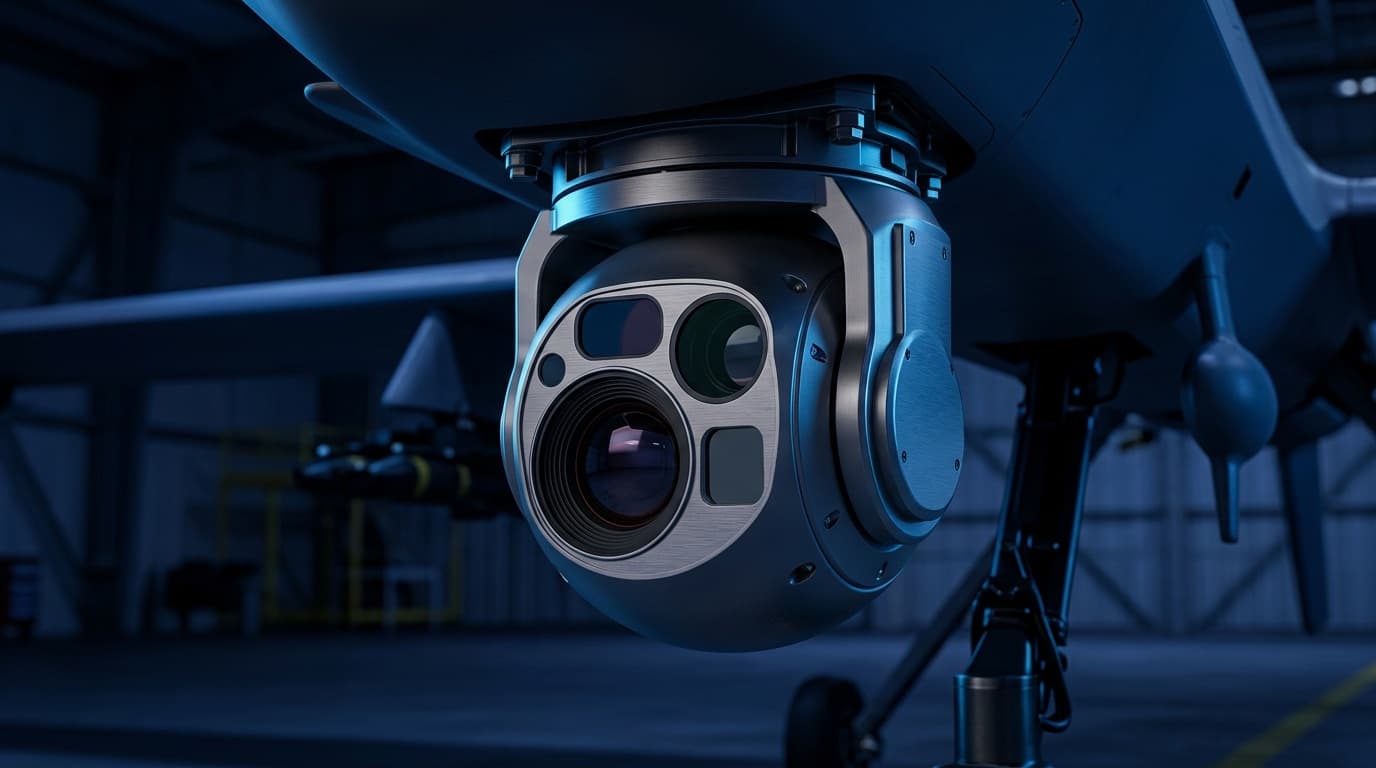
Infrared (MWIR/LWIR) optics and ruggedized optomechanical housings for electro-optical reconnaissance, targeting systems, UAVs, and national combat platforms.
Electro-optical payloads are qualified against the environment, not the lab: sand, salt fog, thermal shock, vibration and pressure differential. SPEKTON builds the whole chain in-house: hard IR substrates, durable coatings, athermalized optomechanical housings. The aperture and the structure behind it get designed and verified together.
Where we're used
MWIR / LWIR sensor windows
Germanium, zinc sulfide and sapphire windows for thermal imagers and targeting pods, coated for maximum in-band transmission and hardened against rain and sand erosion.
Ruggedized optomechanical housings
Metal additive housings and gimbal structures that hold alignment across the full military temperature range, with athermal mounting for mixed-CTE material sets.
Debris shields & sacrificial optics
Scratch-resistant barrier windows that take the environmental damage instead of the sensor assembly behind them, replaceable in the field.
Capabilities behind it
- Flat OpticsManufacturing to ISO 10110 standards for windows, mirrors, prisms, filters, and master flats requiring high flatness and sub-micron TTV precision, up to 500 mm diameter.
- Optical CoatingsIon-assisted deposition chambers, with a full spectral curve measured from VIS to LWIR for every batch.
- Optical & Optomechanical AssemblyAlignment, integration, and testing of precision optics into opto-mechanical housings under controlled cleanroom conditions.
- Metal Additive ManufacturingLaser powder bed fusion (LPBF), thermal shrinkage management, and high-density part production in the largest build chamber in the EMEA region (800 × 800 × 1500 mm).
Typical materials
Have a drawing for this?
Send your technical drawing or 3D CAD model through our secure channel. Our engineering team replies with a quotation.